
.png)
Command Centre / Experience Centre Active LED Walls: Confusion Is the Sales Strategy
Over the last 15+ years, I have personally visited more than 60 Original Equipment Manufacturers across the world. These were not distributor meetings or showroom tours. I have spent time inside LED manufacturing plants, calibration lines, ageing rooms, and raw material storage areas. I have seen how LED walls are actually built, not how they are marketed.
That experience teaches you one uncomfortable truth. Confusion in the Command Centre LED wall market is not accidental. It is systemic.
How buyers are quietly trained to ask the wrong questions
Most customers come prepared. They ask questions that sound technical and responsible.
Is it SMD, COB, or MIP? What lamp type is used? What is the brightness? What is the refresh rate? Is the cabinet aluminium or MS? Which receiving card, sending card, and controller are being offered?
These questions are not wrong. They are incomplete.
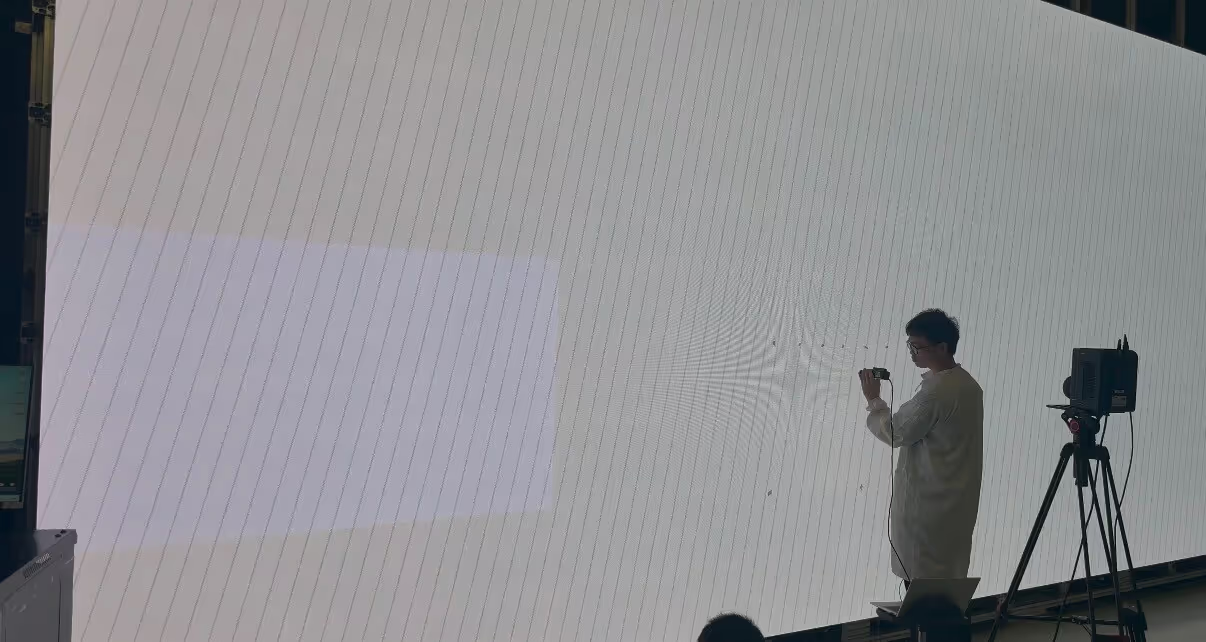
Over time, the market has trained buyers to stop here. These parameters are easy to explain, easy to compare, and easy to defend in a sales pitch. Once these boxes are ticked, buyers feel informed and confident, while the most critical engineering decisions remain completely invisible.
The reality sales decks do not show
What is rarely explained is that the same brand, at the same pixel pitch, often sells five or six internal quality variants. The datasheet looks identical. The internal architecture is not.
Different LED binning grades. Different driver ICs. Different power supplies and derating margins. Different thermal designs. Different calibration depth. Different redundancy options.
All under the same product name.
I have seen LED walls positioned as “command centre grade” that are essentially repackaged commercial products. Cost is reduced quietly by choosing lower-grade driver ICs that struggle at low grey levels, trimming calibration steps, removing redundancy because “the tender didn’t ask for it,” and running power supplies closer to their limits so failures occur after the warranty period.
None of this shows up in a brochure.
Why identical specs deliver very different results
This is why two LED walls with the same specifications can behave very differently in real operation. Most people have experienced this while buying a television. Two TVs claim 4K, HDR, and similar colour performance. One looks stunning. The other looks flat and dull.
Active LED is no different. Except in a Command and Control Centre, the wall runs 24x7, supports decision-making under pressure, and directly affects operator fatigue and response time.
Low-grey performance, colour stability over time, thermal behaviour, and calibration discipline matter far more than headline numbers. These are not features. They are outcomes of engineering choices.
The harsh truth about how margins are protected
I do not believe brands cheat. But I will say this clearly. The system rewards selling, not educating.
Sales teams are incentivised to push configurations that maximise margin while staying within acceptable specifications. The product will work. It will pass handover. It will look impressive on day one. And slowly, over months of continuous operation, its compromises will begin to show.
By then, the deal is closed and accountability is diluted.
What professionals look at instead
When I evaluate an Active LED wall for a Command and Control Centre, I look beyond spec sheets. More than 35 parameters matter. LED binning consistency, driver IC behaviour at low greys, scan ratio trade-offs, receiving card bit depth, power derating philosophy, thermal margins, calibration depth, redundancy architecture, repairability, and long-term brightness decay.
These are not sales questions. They are operational questions.
Why honest consulting matters
Most buyers are not careless. They are simply never shown where to look.
This is why independent, engineering-led consulting is essential in mission-critical environments. Someone has to sit on the buyer’s side of the table, translate engineering reality into decisions, and clearly separate must-have parameters from good-to-have features at the right price point.
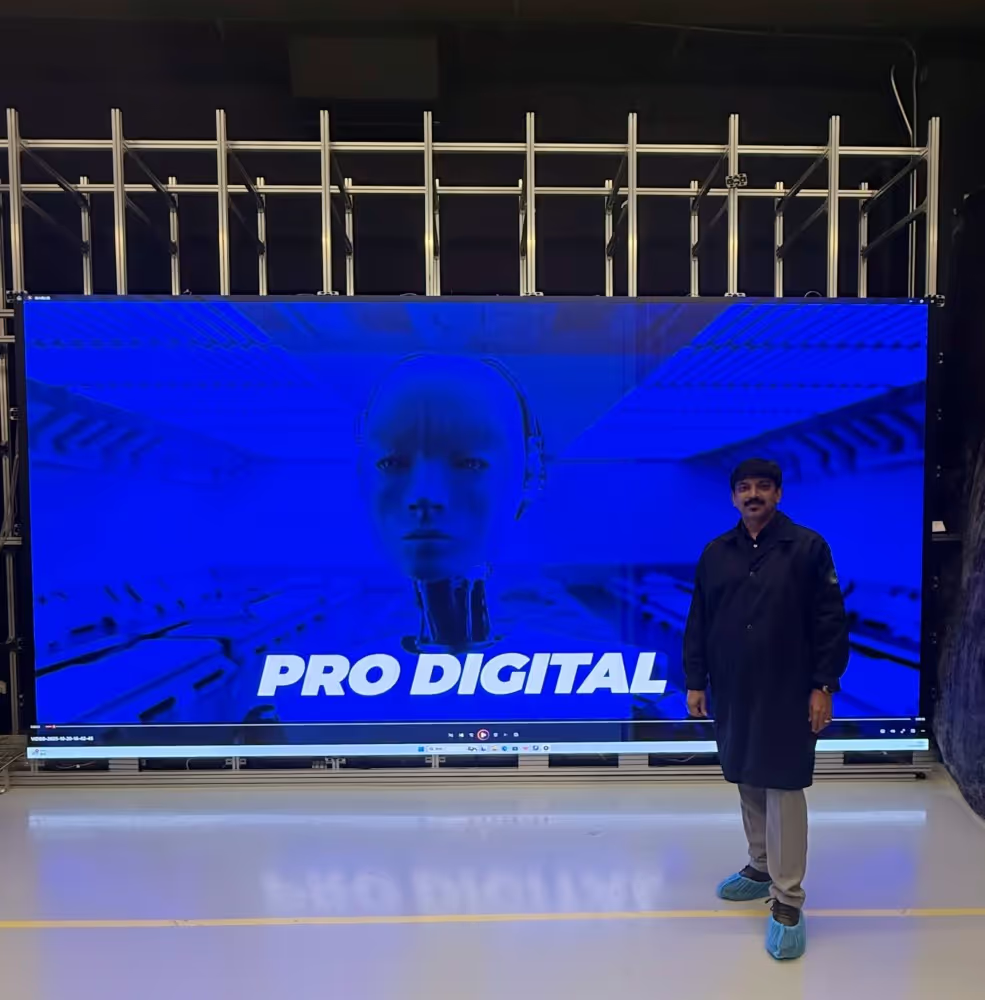
If you feel confused while selecting a Command Centre LED wall, that confusion is not your weakness. It is the outcome of how this market operates.
Clarity is not expensive. Confusion is.
If you are planning a Command and Control Centre and want to make an informed, engineering-led decision, you can book a consulting session with Pro Digital.
%402x%20(1).svg)